
Deleting the To-Do List: How I Manage Energy, Not Time
Lilli • March 26, 2026
There's a version of productivity advice that assumes you are a factory.
It tells you to batch your tasks, block your calendar, protect your deep work hours. It tells you that if you just design the right system, you will output at peak capacity, every day, on schedule.
I tried that version. I built the color-coded calendars. I bought the planners. I set the timers. And every single time, I would crash into a Tuesday afternoon where the list was full and my brain was somewhere else entirely—staring at the next task like it was written in a language I'd temporarily forgotten how to speak.
It wasn't a discipline problem. It wasn't a planning problem.
It was an energy problem. And underneath that, a design problem — because every system I tried was built for a brain that works in straight lines.
You cannot pour from an empty vessel. And no amount of time blocking changes the fact that some moments, your soil just isn't fertile.
The Lie of the Consistent Day
Here's what nobody in productivity culture wants to admit: your energy isn't a fixed daily budget that resets every morning.
It moves. It shifts. It depends on how you slept, whether you've eaten, what kind of emotional weather you're carrying. For those of us who take medication for ADHD, it also depends on timing—whether you're in the window where it's working, coming up on when it isn't, or navigating a day you chose not to take it at all. Monday morning you and Monday afternoon you can be operating with a completely different capacity. They're both real and they both count.
When I wrote about the graveyard of good ideas, I talked about the difference between projects that are dormant, incubating, or continuous. That same reality lives inside a single day. The mistake I kept making wasn't about choosing the wrong projects. It was about expecting the same output from wildly different states — and calling myself undisciplined when the math didn't work. So I stopped trying to fix my schedule and started trying to read my conditions instead.
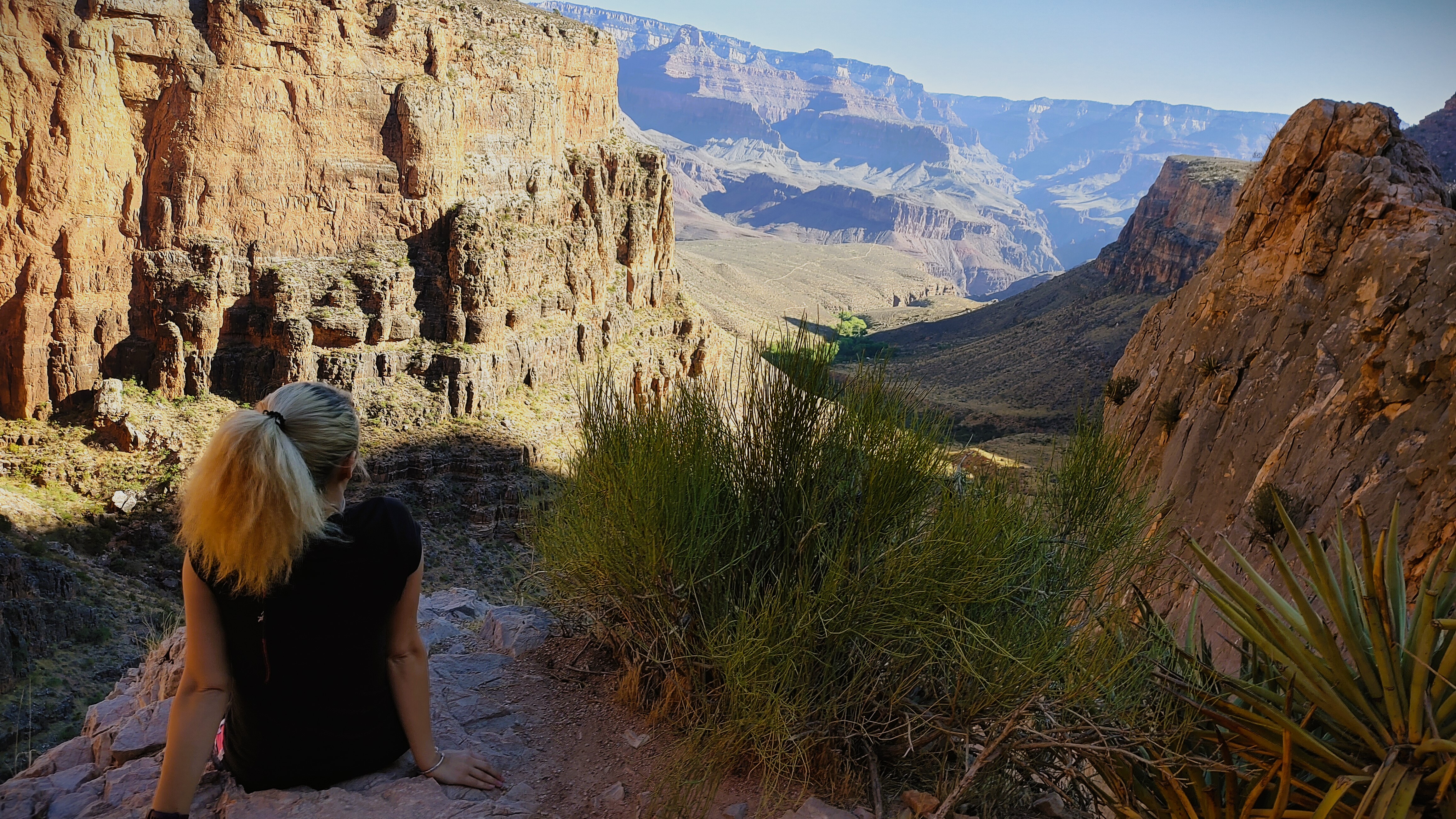
I'm in that planning phase right now — staring at a drought year and deciding what the ground can actually hold before I commit to anything. That question, asked honestly before the season starts, changes everything you plant. It's the same question I've learned to ask myself every morning before I open a single task. The question was never "when will I do this?" It was always "what can the soil actually support right now?"
Starting Before the List
The answer to that question starts with a journal.
Every morning before I open a single task, I do a grounding ritual — not a to-do list, but a soil check. I designed a daily journal around this practice and published it on Amazon, but the ritual matters more than the format. Prompts for gratitude, for what I'm excited about, a mantra, a focus, an affirmation, and today's possibilities. Nothing urgent. Nothing with a deadline. Just an honest read of where I am before I decide what to ask of myself.
This practice changed something for me. Because when you slow down long enough to notice you're grateful and excited about certain things—and not others—you get a signal about your actual state. You find out whether today is a day for building something new or a day for tending to what already exists.
That signal is the thing I was missing when I was managing time. I had perfect visibility into my schedule. I had no visibility into myself.
What Energy States Actually Look Like
I've stopped thinking about energy as high or low, like a switch set to binary. It's more like a dial, and it moves throughout the day, not just day to day.
There are stretches where I am genuinely in it. Focused, fast, solving things I couldn't crack an hour ago. These windows are real, they're powerful, and they're finite. When I'm in one, I protect it aggressively. Notifications off, door closed, everything else can wait. This is not the time for email.
There are middle stretches—functional but not fierce. I can think, I can collaborate, I can review and respond and plan. Most of the steady, relational parts of my work live here. These are good hours for stand-ups and code reviews and writing drafts that I'll tighten later.
And then there are the low stretches. These are real too, and this is where I used to lose myself. I'd sit in front of a full to-do list and do absolutely nothing, then feel like I'd failed the day. What I've learned is that low-energy stretches aren't asking for nothing—they're asking for the right thing. Administrative tasks. Research with no output required. Sometimes I make things with my hands—wire wrapping, macrame, whatever is sitting on the craft table. Tactile work doesn't ask the same things of me that code does.
The trick is matching the task to the state. Not forcing the state to match the task.

Decision Paralysis Is an Energy Problem
One thing that surprised me: how much of my paralysis wasn't about the decisions.
It was about the cost of making them.
Every decision is a small withdrawal from your executive function account. And with an ADHD brain, that account has unpredictable liquidity. Some windows it's flush. Some windows it's overdrawn by 10am.
The worst version for me is a project that's technically one task but feels like standing at the base of something enormous with no visible path up. I wrote about this in the graveyard post — the door with no handle. You know it needs to happen. You can't find where to begin. So you don't begin at all, and then you feel like you failed something that was never actually organized enough to attempt.
When I sat in front of a traditional to-do list in a low state, the list itself became the problem. Fifteen items, all appearing equally urgent, all requiring the same depleted currency just to figure out where to start. So I'd do nothing. Or I'd do the three smallest things and feel like I hadn't moved. Or I'd end up in a rabbit hole I didn't intend to find.
The thing that helped wasn't a better list. It was doing the sorting before the paralysis hit — not in the middle of it. Then, instead of asking "what should I do?" I ask "what kind of window am I in right now?" The answer points me somewhere specific. The decision is already made.
I've been quietly building a personal tool that formalizes exactly this—pairing task types to energy states and doing check-ins throughout the day so the system adapts as I do. It's still early, and I'll share more when it's further along. But even before the tool, the framework itself changed how I work.
This Isn't Self-Care Advice
I want to be clear about what this isn't.
This isn't a bubble bath post. This isn't the kind of "burnout prevention" content that tells you to take more walks as though walking fixes a structural mismatch between how you're wired and how you're working.
This is systems design for a non-standard brain.
Executive dysfunction isn't laziness. Energy depletion isn't weakness. They are neurological realities that most productivity tools completely ignore, because most productivity tools were designed with a very specific kind of output in mind—linear, consistent, and machine-like.
That's a design failure. And I think we can do better.
As I wrote about in the broken ladder: when you stop trying to force yourself into the shape the mold expects, you start to find the shape that actually fits. The same is true at 2pm on a Tuesday.
Let's Get to Work
Time is finite. Energy is renewable. That difference changes everything.
If you've been managing your calendar and still wondering why you feel like you're failing, try shifting the question. Not "when will I do this?" but "what state will I need to be in to do this well?"
Notice your high-capacity windows this week. Protect them for the things that actually require them. Give yourself permission to do only low-demand work in low-demand stretches. Watch what happens when you stop fighting the tide and start reading it instead.
You don't need a system that makes you work harder. You need one that helps you work true.
🌱 Over to You: Have you ever tried matching tasks to your energy instead of your calendar? What does your high-capacity window actually look like, and how do you protect it? Share in the comments.
Comments
No comments yet. Be the first to share your thoughts!